04.06.2026 | Insight
Nefco is committed to fostering a culture of integrity, accountability and ethical conduct across all its activities. “Corruption is not just an economic issue; it is a threat to democracy and the rule of law. It undermines trust and deprives societies of vital services – directly affecting people’s lives,” says Linda Lundqvist, Chief Ethics and Compliance Officer, when explaining Nefco’s obligation to ensure funds are used for the intended purposes.
Corruption is a global problem, and by some measures it is getting worse. Transparency International’s Corruption Perceptions Index is the most widely used global measure of public sector corruption, ranking more than 180 countries and territories by perceived levels of corruption. The 2025 index shows that corruption remains a significant challenge in some of the countries where Nefco works, particularly in Eastern Europe and Sub-Saharan Africa.
“We have an obligation to ensure that our own capital and the funds we are entrusted with are used for the intended purposes,” explains Linda Lundqvist, Nefco’s Chief Ethics and Compliance Officer.
“This responsibility extends not only to our donors, but also to the people and communities the funds are meant to support.”
Lundqvist explains how corruption can conceal governance failures and cause conflicts. Fraud and diverted funds can weaken public services such as health, education and infrastructure, while also financing illegal activities and creating barriers to economic growth.
“Corruption is not just an economic issue; it is a threat to democracy and the rule of law,” Lundqvist emphasises. “It undermines trust in public institutions and deprives societies of resources needed for vital services – directly affecting people’s lives.”
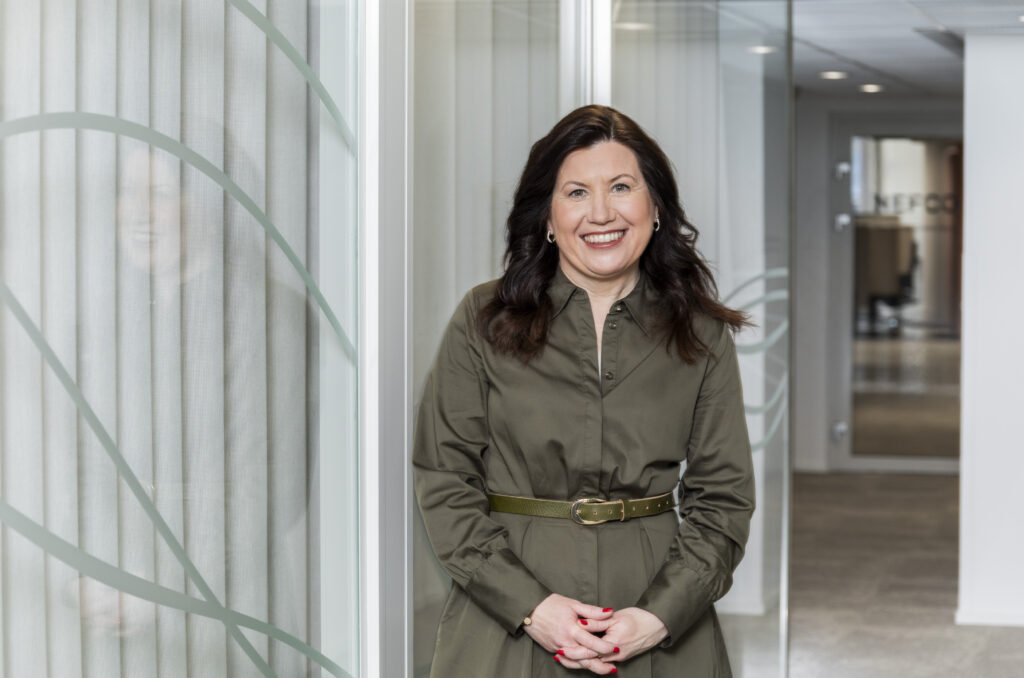
Team coordinates risk mitigation work
Lundqvist leads Nefco’s Ethics and Compliance Department, an independent function within Nefco who works on integrity, ethics and accountability. Established in 2020, the team now consists of five members. In 2024, the department was recognised as Small Compliance Team of the Year in the financial services category at the International Compliance Association (ICA) Compliance Awards.
The team works closely with colleagues across Nefco to identify and manage risks in practice, supporting projects from planning to implementation. This includes providing guidance and training, managing due diligence processes, contributing to project decision-making, and receiving and investigating complaints and allegations of wrongdoings. The team also collaborates with Nefco’s Legal Department, contributing to the development and updating of policies, rules and guidelines.
Nefco’s whistleblower platform, launched in 2024, is available in all major languages used in Nefco’s project countries. It gives anyone an easy way to raise a concern – whether it relates to suspected fraud or corruption, a procurement issue or a potential environmental risk. The platform is secure and allows anonymous submissions. To strengthen accountability, all cases are initially reviewed by an independent law firm.
Global best practices adopted
As an international financial institution, Nefco is not subject to national legislation but is governed by its own legal framework, aligned with the laws of its owner countries. Nefco also follows the standards and best practices applied by other international financial institutions and groups including the Financial Action Task Force and the Global Forum on Transparency and Exchange of Information for Tax Purposes.
“Sometimes donors have specific ethics and compliance requirements, but in some cases we apply even stricter standards,” Lundqvist says.
All parties who work with Nefco must follow local laws, but they are also required to follow Nefco’s policy and procedures which might not exist in local legislation, for example on the prevention of sexual harassment, exploitation and abuse.
Identifying and managing integrity risks
Generally, Nefco does not engage in new projects which are deemed high risk from an integrity perspective.
“We had a case in Ukraine where we discovered that the listed owners of a company were not the true beneficial owners,” Lundqvist says. “The beneficial owners included one person on a sanctions list and two others with close ties to sanctioned individuals. Based on these findings, Nefco did not proceed with the project.”
This is an example of Integrity Due Diligence, where Nefco checks that it works with reputable and sustainable business partners to safeguard resources and ensure project objectives are met. It is similar to an extended version of the ‘Know Your Customer’ (KYC) process used by commercial banks which includes anti-money laundering, counter-terrorist financing and tax transparency requirements.
“We screen for past or ongoing criminal investigations or convictions, adverse media and Politically Exposed Persons,” Lundqvist explains.
Nefco closely monitors procurement and project implementation, payments are only made directly to contractors against milestones and progress is monitored. If risks are identified, Nefco can add checks and screenings or enhance monitoring. This includes actions due to sanctions risks, such as if businesses have links to Russia or Belarus.
“We look at the whole project chain, including planning, procurement and implementation.”
When relevant, extra steps might be taken to mitigate specific risks, such as requesting the removal of certain individuals from decision-making processes, putting additional money laundering controls in place, requiring internal policies to be revised, adding more audit requirements or increasing monitoring during project implementation.
Challenges in Ukraine
In the summer of 2025, Ukraine’s parliament moved to strip the country’s key anti-corruption bodies of their independence, promoting a significant outcry both in Ukraine and internationally. Authorities subsequently reversed the decision.
“It was a welcome step to listen to civil society and restore the agencies’ independence,” says Lundqvist. “We have been operating in Ukraine for over 20 years, but the environment significantly changed with Russia’s full-scale invasion. Today, we have over 10 colleagues working in Ukraine on project implementation, alongside the multiple Ukrainian colleagues across our investment teams, Legal department and the Ethics and Compliance unit. Understanding the local context – the society, legislation and politics – is essential.”
Ethics and compliance are becoming increasingly important globally, with more work being done across sectors. While leading by example remains central for Nefco, it also exchanges experience and lessons learned through collaboration, events and partnerships.
In 2025, Nefco carried out a pilot project with the Basel Institute on Governance to identify and mitigate integrity risks in connection with an infrastructure project in Ukraine. Nefco will also take part in the Institute’s 2026 International Collective Action Conference, where Lundqvist is to join a panel on incentives for business integrity among SMEs along the supply chain.
Nefco also brings partners together. Earlier this year, Nefco hosted an event with leading Ukrainian and international experts, donors and partners to discuss ongoing anti-corruption efforts in Ukraine and how integrity and accountability are built into the project cycle.
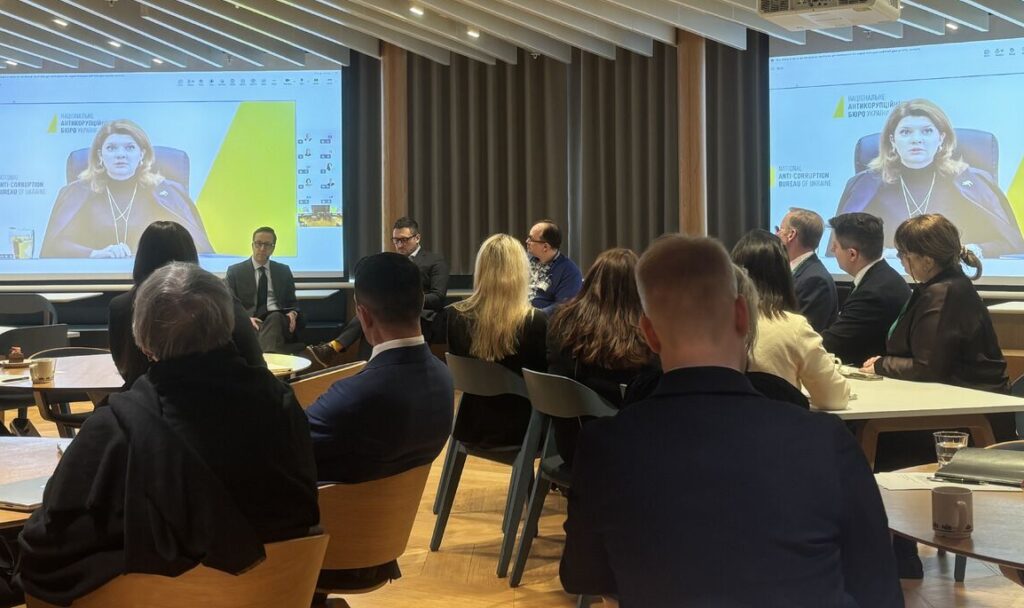
“Our Ethics and Compliance team coordinates the integrity work, leads implementations of new initiatives and makes sure Nefco aligns with evolving standards,” Lundqvist concludes. “But everyone at Nefco plays an important role and shares responsibility for staying vigilant. We operate in some high-risk jurisdictions, and there is a strong understanding across Nefco of the risks and what we need to do. It is impossible to remove all risks, but we work hard to identify and mitigate them.”
Read more about ethics and compliance at Nefco on nefco.int/compliance.
Ethics & compliance at Nefco in 2025

392
integrity due diligence reviews completed

9
complaints handled

4
investigations of prohibited practices
Contact person