03.06.2026 | Case story
Norsk Renewables, a Norwegian renewable energy developer focused on utility-scale projects, together with their Ukrainian partner Pro-Energy, has successfully built, maintained and operated a renewable energy plant in Ukraine despite the war. Their cooperation with Nefco, who provided financing for the project, has remained strong through these extremely challenging years for Ukraine.
The risk of a full-scale war in Ukraine began in 2014 with the Russian annexation of Crimea, so it was a risk to consider a new solar power project in the country in 2019.
“There were doubts about using solar in Ukraine,” says Bo Nyhus, Investment Director at Nefco. “The industry was young and undeveloped, but the Ukrainians very quickly built up the capacity and technical skills needed. Solar installations in Ukraine were increasingly viewed as technically proven and commercially viable.”
“There were doubts about using solar in Ukraine. The industry was young and undeveloped, but the Ukrainians very quickly built up the capacity and technical skills needed, says Bo Nyhus, Investment Director at Nefco. ”
One of the companies attracted by the opportunity was Norsk Renewables, at that time called Norsk Solar. Founded in 2017, the Norwegian company had been looking for solar projects in Ukraine with the help of local partners.
Replacing fossil fuels with solar
“At the time, Ukraine introduced a feed-in tariff framework that was one of the most attractive in Europe for solar,” explains Torbjørn Elliot Kirkeby-Garstad, CEO of Norsk Renewables. “The fundamentals were strong: good irradiation levels, a clear regulatory path, and a real need for new generation capacity.”
Norsk Renewables approached Nefco to discuss funding possibilities for this green project. Ukraine has historically relied heavily on fossil fuels and nuclear generation, creating a strong need for diversified and modernised energy infrastructure. Expanding renewable energy capacity was therefore viewed as strategically important from both energy security and decarbonisation perspectives.
“We were interested in this project because renewables can have such good environmental benefits,” Nyhus further explains. “This proposed solar project would replace fossil fuels and therefore reduce the CO2 intensity in the national grid.”
Nefco provides debt financing for the project in 2019
An agreement was signed in June 2019, with Nefco providing a EUR 4.35 million loan while Norsk Renewables and three partners contributed EUR 4.35 million in equity. These were initially Pro-Energy and Windforce Ltd and later joined by New Horizons Foundation.
“When we entered the project, we were a relatively young company, and this was new territory for us, not just geographically but in terms of the role we were taking on,” continues Kirkeby-Garstad. “The goals were straightforward but ambitious: deliver the project on time, get it operating to spec and demonstrate that we could manage the full project lifecycle.”
Local partners played a critical role in implementing the project. Pro-Energy LLC, a 30% shareholder and Ukrainian development partner, was responsible for project development activities. Beyond development, Pro-Energy has remained actively involved in supporting operations and long-term asset management.
The plant was commissioned by the end of 2019, and in the summer of 2020 the power purchase agreement with the government as guaranteed buyer became active. But everything changed in February 2022, when Russia’s full-scale invasion of the country began.
War creates unexpected risks
“Our immediate priority was the safety of the local teams and partners. Everything else came second,” Kirkeby-Garstad emphasises.
Norsk Renewables had to manage serious risks: physical security, grid stability and supply chain disruptions for spare parts and equipment. Additionally, the Ukrainian government was under intense financial pressure, and the payment environment became uncertain.
“This is where our relationship with Nefco was important,” Kirkeby-Garstad says. “From the outset, they proved to be a thoughtful and constructive financing partner. When the situation in Ukraine deteriorated, they approached it with pragmatism and a long-term perspective, which gave us the flexibility needed to focus on keeping the asset operational. That kind of partnership, both with Nefco and Pro-Energy as a local investment and execution partner, was critical to maintaining operational continuity and managing risks throughout the project lifecycle.”
“When the situation in Ukraine deteriorated, Nefco approached it with pragmatism and a long-term perspective, which gave us the flexibility needed to focus on keeping the asset operational,” comments Torbjørn Elliot Kirkeby-Garstad, CEO of Norsk Renewables.
Investment successful despite war
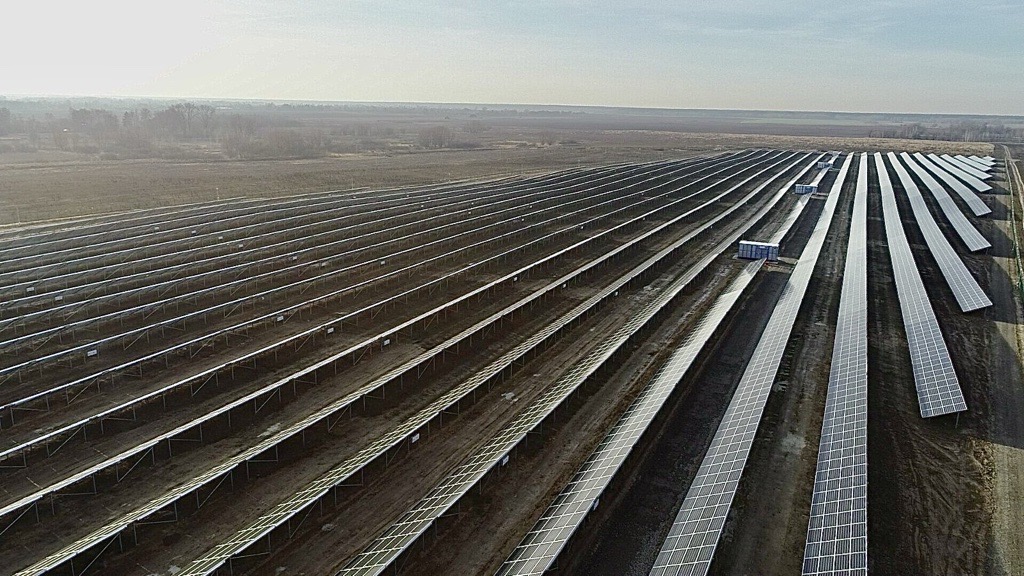
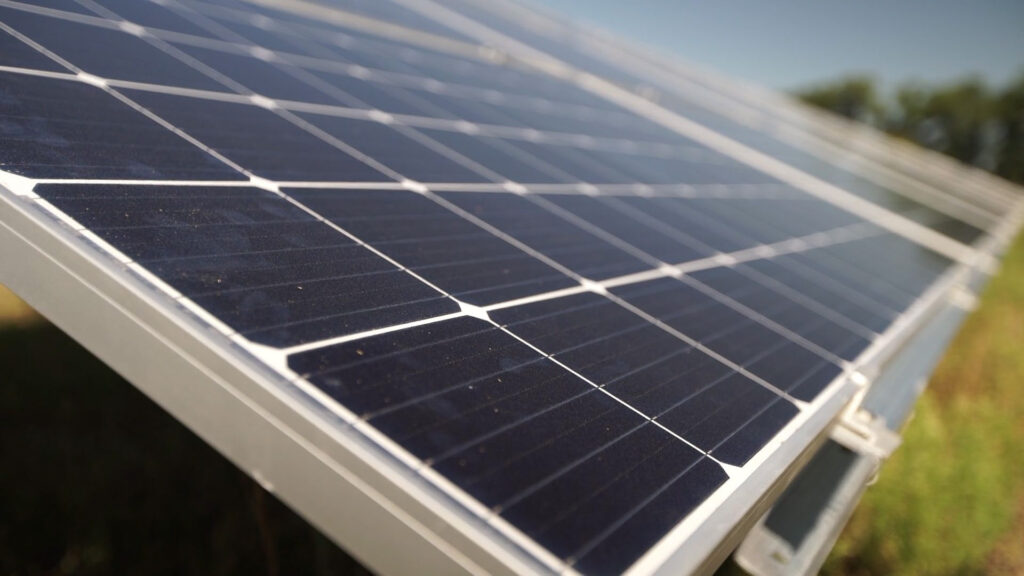
Four years later and the solar plant is still going strong: since the commercial operation date in mid-2020, the plant has provided over 43 GWh of green energy, equivalent to the annual energy consumption of about 2,500 households in Norway, and has abated 34,000 tonnes of CO2 equivalent in emissions, which is equivalent to driving approximately 4,900 laps around the equator with a modern-day petrol car. Norsk Renewables and their equity partners have now repaid the EUR 4.35 million loan to Nefco.
“This is something we are genuinely proud of,” says Kirkeby-Garstad. “The plant has performed well technically, we were disciplined about cash management from day one, and the feed-in tariff, despite some well-documented payment delays, did ultimately deliver the majority of the revenue we had modelled. The choice to accelerate repayment was also a pragmatic and prudent financial response to operating in a wartime economy.”
Professionalism and resilience keys to success
Nyhus, who has years of experience working with green investments in Ukraine, praises the local Ukrainian partner Pro-Energy and Norsk Renewables.
“They never imagined working under wartime conditions, yet they have been professional and consistent throughout,” he says. “We have been rewarded with great environmental benefits despite the risks. It shows the great social resilience in Ukraine and how even in difficult times, people still work together.”
“Managing and operating an energy asset during wartime required constant adaptation. We had to ensure uninterrupted technical operations, protect personnel, maintain communication with contractor and grid operator, and respond quickly to changing security and energy market conditions,” says Ruslan Delidon, Director of Pro-Energy.
Norsk Renewables continues to expand its development activities internationally, with a strong strategic focus on South Africa and the broader Sub-Saharan African region. They continue to operate the solar plant in Ukraine and are carefully monitoring the situation on the ground.
“What gives us optimism over the longer term is the reconstruction agenda,” Kirkeby-Garstad says. “Ukraine’s energy infrastructure is going to need significant rebuilding and modernisation, and renewables will be central to that, particularly as the country deepens its integration with the European grid.”
Feature photo: Solar plant under construction in Ukraine – Norsk Renewables
For further information, please contact: